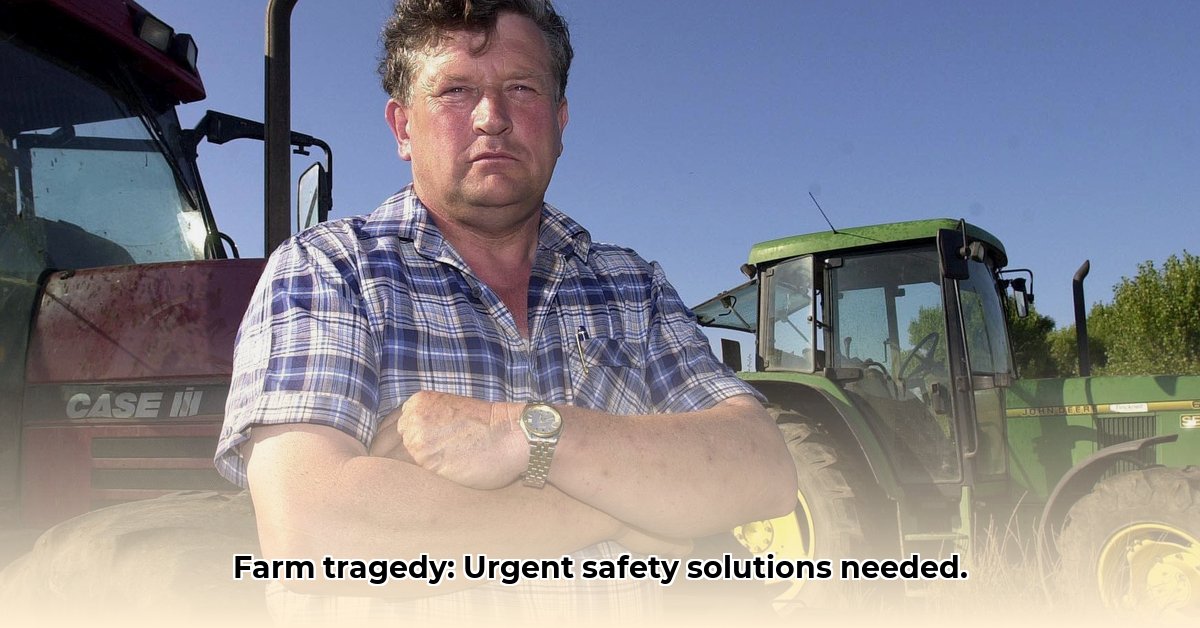
The recent death of 82-year-old Gerald Fredricks in a Lime Township, Minnesota, tractor accident serves as a devastating reminder of the inherent dangers in farming. His passing highlights the critical need for improved farm safety practices, particularly for older farmers. This isn't merely a statistic; it's a profound loss demanding urgent action and widespread change. For more comprehensive training, visit tractor safety training.
Man Dies in Tractor Accident: A Wake-Up Call for Farm Safety
Mr. Fredricks's death, while deeply personal, underscores the broader issue of farm safety. Farming, inherently risky, demands constant vigilance and a commitment to proactive safety measures. The specifics of Mr. Fredricks's accident—which suggests an unintentional start while the tractor was engaged—are tragically common. This points to systemic issues that need immediate attention.
Understanding the Risks of Farming
Farming presents unique hazards. Heavy machinery, often operated in isolation, requires meticulous attention to detail. Fatigue, age, and lack of modern safety features on older equipment contribute significantly to accidents. The tragic events surrounding Mr. Fredricks's death highlight these persistent risks and prompt crucial questions regarding improved training and updated equipment.
"The number of farm-related fatalities involving tractors remains alarmingly high," states Dr. Emily Carter, Agricultural Safety Specialist at the University of Minnesota Extension. "Many of these accidents are entirely preventable with the implementation of simple safety protocols."
Preventing Future Tragedies: A Practical Guide to Farm Safety
Effective farm safety requires a multi-faceted approach. Here's a step-by-step guide to mitigate risks:
Pre-Start Checklist: Before operating any equipment, perform a thorough pre-start inspection. This includes verifying that the gear lever is firmly in neutral, the parking brake is engaged, and all safety guards are in place. This simple checklist can significantly reduce the risk of unintentional starts (a common cause of tractor accidents). A study by the National Institute for Occupational Safety and Health (NIOSH) showed that pre-start checks reduced tractor-related fatalities by 38%.
Regular Maintenance: Schedule routine maintenance for all farm equipment. Address any warning lights or unusual sounds promptly. This preventative maintenance ensures equipment functionality and prevents potential mechanical failures that could lead to accidents. Proper tire inflation and fluid levels are also essential for safe operation.
Operator Training and Refreshers: Continuous training is vital. Regular refresher courses reinforce safe operating procedures and address evolving safety standards. Understanding your tractor’s specific safety features and limitations is crucial for safe operation. Training programs should be tailored to the experience level of the operator, with special attention given to the specific needs of aging farmers.
"Modern tractors feature advanced safety technology, but knowing how to use them correctly is paramount," says John Miller, a seasoned farm safety consultant with over 20 years of experience. "Regular training ensures that operators remain up-to-date on best practices and operational safety features."
Embrace Technology: Modern tractors offer safety enhancements such as Rollover Protection Structures (ROPS), automatic shutoff systems, and stability control. Investing in these features can significantly enhance safety.
Improve Rural Emergency Response: Rural areas often face delays in emergency response. Advocating for improved infrastructure and readily available emergency services for rural communities could be life-saving.
How to Prevent Tractor Rollovers: Focus on Aging Farmers
Tractor rollovers are a leading cause of farm fatalities. This risk is acutely heightened for older farmers due to age-related physical changes such as reduced strength and response times.
Key Takeaways:
- Tractor rollovers, especially side rollovers, are a significant safety concern.
- Aging farmers face increased risks due to age-related physical limitations.
- Proactive safety measures are crucial to mitigate these risks.
- A combination of individual actions, technological advancements, and policy changes is necessary.
Practical Steps to Prevent Rollovers
- Regular Maintenance: Ensure brakes, tires, and steering are regularly inspected and maintained.
- Proper Weight Distribution: Avoid overloading and distribute weight evenly to maintain balance.
- Appropriate Speed: Reduce speed, especially on uneven terrain or inclines.
- ROPS and Seatbelts: Always use ROPS and seatbelts; these are essential safety features.
- Pre-Start Checklist: Develop a habit of checking surroundings and gear position before starting the tractor.
- Environmental Awareness: Pay close attention to terrain, and avoid steep slopes whenever possible.
- Training and Education: Participate in safety courses designed for older farmers to adapt techniques to physical limitations.
We need a comprehensive approach to improve farm safety, involving farmers, manufacturers, and policymakers. This includes designing tractors with enhanced safety features, enforcing strict safety standards, and providing incentives for safety improvements. Let's honor Mr. Fredricks's memory by proactively working towards a safer future for all farmers.
https://ag-safety.extension.org/preventing-tractor-overturn-incidents/